Geopolitics Is Now an IT Problem

Listen Here
Your next major technology constraint may originate thousands of miles outside your enterprise.
Where data resides, who manufactures critical chips, whether hardware arrives on schedule and which technologies organizations can access are increasingly influenced by forces well beyond the IT department.
In this episode of TechEDGE, we explore why geopolitical risk is becoming a technology strategy issue for CIOs, CTOs and other IT leaders. From semiconductor concentration and export controls to tariffs, regional conflicts and AI regulation, external events are introducing new variables into technology budgets, vendor relationships and multi-year roadmaps.
The goal isn't to predict the next global disruption. It's to understand where your technology strategy is exposed — and build enough flexibility to respond when conditions change.
What You’ll Learn
- Why geopolitical developments are increasingly becoming IT planning issues
- How global events can affect technology budgets, procurement timelines and infrastructure availability
- Why vendor geography deserves greater consideration in technology risk management
- How semiconductor concentration creates dependencies for AI and other critical initiatives
- Why government policy is becoming an important variable in enterprise AI strategy
- How leaders can pressure-test technology roadmaps against external disruptions
- Why scenario planning may be more valuable than relying on a single forecast
- How procurement, finance, risk and technology teams can work together to identify vulnerabilities earlier
Why It Matters
Technology leaders have always planned around uncertainty. What's changing is where that uncertainty comes from.
A technology roadmap can be sound from an architecture and business perspective and still run into trouble because of a supplier disruption, export restriction, regulatory change or infrastructure shortage.
That means understanding external dependencies is becoming an increasingly important part of technology leadership.
CIOs don't need to become geopolitical experts. But they do need to know where critical projects depend on specific suppliers, regions and policies — and what happens if those assumptions change.
More from TechEDGE
About the Author
 Theresa Houck
 Theresa Houck
Contributor
Theresa Houck is an award-winning B2B journalist with more than 35 years of experience covering industrial markets, strategy, policy, and economic trends. As Senior Editor at EndeavorB2B, she writes about IT, OT, AI, manufacturing, industrial automation, cybersecurity, energy, data centers, healthcare, and more. In her previous role, she served for 20 years as Executive Editor of The Journal From Rockwell Automation magazine, leading editorial strategy, content development, and multimedia production including videos, webinars, eBooks, newsletters, and the award-winning podcast “Automation Chat.” She also collaborated with teams on social media strategy, sales initiatives, and new product development.
Before joining EndeavorB2B, she was an Industry Analyst at Wolters Kluwer in its human resources book publishing operation. Before that, she spent 14 years with the Fabricators & Manufacturers Association, Intl., serving as Executive Editor of four magazines in the sheet metal forming and fabricating sector, where she managed and executed editorial strategy, budgets, marketing, book publishing, and circulation operations, and negotiated vendor contracts.
Houck holds a Master of Arts in Communications from the University of Illinois Springfield and a Bachelor of Arts in English from Western Illinois University.
 Resources
Quiz
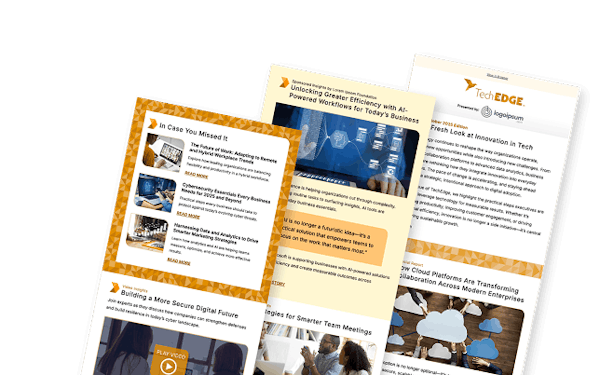
Your Competitive Edge, DeliveredStay ahead of the curve with weekly insights into emerging technologies, cybersecurity, and digital transformation. TechEDGE brings you expert perspectives, real-world applications, and the innovations driving tomorrow’s breakthroughs, so you’re always equipped to lead the next wave of change.