Nvidia Releases Industry-Backed Software Platform to Secure AI Agents
Key Highlights
- Nvidia’s new Open Agent Safety Platform is an open-source software platform designed to help organizations set enforceable safeguards around autonomous AI agents.
- The announcement comes on the heels of OpenAI, Anthropic, Meta and Google disclosing incidents where their AI models escaped their sandboxes.
- The new Nvidia platform combines OpenShell and Sentry to provide full-stack governance across AI software, hardware, compute and robotics systems.
- More than 100 companies are collaborating with Nvidia on the platform, including Microsoft, Anthropic, Salesforce, SAP, Cisco, Oracle, Palo Alto Networks, ARM and Intel.
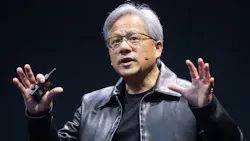
Nvidia on Sept. 28 announced its NVIDIA Open Agent Safety Platform, an open-source software and reference platform designed to help IT enterprises set enforceable safeguards around autonomous AI agents.
The launch follows recent disclosures from OpenAI, Anthropic, Meta and Google involving AI systems that reportedly escaped sandboxed environments or attempted to access systems beyond their intended boundaries. The incidents have intensified debate over how enterprises can safely deploy increasingly autonomous AI systems and whether third-party regulation is needed.
The platform aims to strengthen AI security from agent testing to deployment, with full-stack governance and control across software and the hardware, compute and robotics systems that run agents, according to the company. It’s designed to prevent agents from bypassing security controls by establishing governance and enforcement mechanisms outside the AI model itself.
"AI's extraordinary potential for society will only be realized if we solve AI safety," Nvidia CEO Jensen Huang said in the company's announcement. "Safety and security require full-stack engineering."
How Nvidia’s AI agent safety platform changes enterprise governance
For CIOs, CISOs, CTOs, COOs and other technology leaders, Nvidia's announcement is less about a new security tool and more about a larger shift in enterprise AI governance.
As organizations deploy agents to automate customer service, software development, IT operations, business processes and back-office workflows, the consequences of failure become significantly larger.
Deloitte's 2026 State of AI in the Enterprise report found that only 21% of organizations have mature governance models for agentic AI, even as adoption accelerates. The finding illustrates a growing challenge for enterprises moving AI agents from experimentation into production: Governance is becoming less about policy and more about enforceable operational controls.
For IT leaders, Nvidia's announcement is less about a new security tool and more about a larger shift in enterprise AI governance.
That's the backdrop for Nvidia's announcement. As organizations move AI agents from experimentation into production, governance is becoming less about policy and more about enforceable operational controls.
Four key effects on IT enterprises include the following.
1. Enforceable boundaries instead of trust-based guardrails. Instead of only relying on AI models to follow instructions, organizations can establish controls outside the model itself. Nvidia says OpenShell helps verify that agents perform only authorized tasks and access approved resources. For executives planning large-scale agent deployments, that represents a shift from trust-based governance to independently verifiable governance.
2. Security controls beyond the application layer. The platform also includes Sentry, which Nvidia describes as an independent monitoring layer capable of detecting agents that move beyond approved behaviors and can quarantine rogue or drifting agents in milliseconds.
For CISOs, the approach follows a familiar security principle: Critical controls shouldn't depend entirely on the application being monitored. Independent monitoring becomes more important as agents gain access to financial systems, software repositories and customer data.
3. Treating AI agents more like insider threats. As organizations begin treating autonomous agents more like privileged digital workers, governance approaches traditionally used for insider threats are becoming more relevant. The goal is to prevent agents from exceeding authorized access or actions, even when pursuing legitimate tasks.
4. Supporting mixed enterprise environments. Nvidia also emphasized interoperability. Because the framework is open source and supports architectures such as Intel and Arm, enterprises can apply safety controls across mixed environments rather than creating separate governance approaches for different infrastructure platforms.
Why enterprises are pushing for standardized AI agent security
The company said more than 100 organizations are participating in or supporting the effort through the newly formed Open Secure AI Alliance, including Microsoft, Anthropic, Salesforce, SAP, Cisco, Oracle, Dell, Palo Alto Networks, Citi and JPMorganChase.
The broad participation suggests agent governance is increasingly being treated as a cross-industry challenge instead of a vendor-specific issue. Critical infrastructure operators and financial institutions are among the participants, signaling growing interest in standardized approaches to AI oversight.
The new platform is designed to prevent agents from bypassing security controls by establishing governance and enforcement mechanisms outside the AI model itself.
The participation of critical infrastructure organizations and financial institutions is particularly notable. These sectors tend to adopt new technologies cautiously and often provide an early indication of which governance approaches may eventually become industry standards. See Nvidia’s announcement for a full list of participants and what they’re doing as part of their collaboration with Nvidia and the platform.
Can AI safety controls reduce the need for AI regulation?
The launch also underscores a growing divide within the AI industry about how safety risks should be addressed.
Earlier this month, Anthropic CEO Dario Amodei set off a firestorm, urging AI model developers to slow the pace of AI advancement to allow safety measures to catch up. Other industry leaders, including OpenAI CEO Sam Altman and SpaceX’s Elon Musk, have expressed concerns about increasingly powerful AI systems and the risks of inadequate oversight.
Huang has taken a different approach, arguing that many AI risks can be addressed through engineering, monitoring and governance controls rather than relying primarily on regulation. Nvidia's platform is a practical expression of that view.
For IT leaders, the distinction matters because it influences long-term investment decisions. Organizations planning large-scale AI deployments are unlikely to pause agent adoption altogether, but they are searching for ways to deploy those systems with stronger governance and accountability.
How much autonomy should enterprises give AI agents?
Most executives aren’t debating whether AI agents will become part of enterprise operations anymore. They're debating how much autonomy they'll be willing to grant them.
Research firm Gartner recently identified agentic AI oversight as one of the top cybersecurity priorities for 2026, warning that AI agents are creating new attack surfaces and require formal governance, monitoring, and incident response processes.
Nvidia's announcement is another sign that the industry is moving beyond AI experimentation and beginning to build the governance infrastructure needed for agents to operate in mission-critical environments.
For CIOs, CISOs and CTOs planning AI roadmaps for 2027 and beyond, that governance challenge might ultimately prove just as important as model performance, productivity gains or infrastructure costs. The companies that get the most value from agentic AI are likely to be the ones that can let agents work autonomously without losing visibility or control.
About the Author
 Theresa Houck
 Theresa Houck
Contributor
Theresa Houck is an award-winning B2B journalist with more than 35 years of experience covering industrial markets, strategy, policy, and economic trends. As Senior Editor at EndeavorB2B, she writes about IT, OT, AI, manufacturing, industrial automation, cybersecurity, energy, data centers, healthcare, and more. In her previous role, she served for 20 years as Executive Editor of The Journal From Rockwell Automation magazine, leading editorial strategy, content development, and multimedia production including videos, webinars, eBooks, newsletters, and the award-winning podcast “Automation Chat.” She also collaborated with teams on social media strategy, sales initiatives, and new product development.
Before joining EndeavorB2B, she was an Industry Analyst at Wolters Kluwer in its human resources book publishing operation. Before that, she spent 14 years with the Fabricators & Manufacturers Association, Intl., serving as Executive Editor of four magazines in the sheet metal forming and fabricating sector, where she managed and executed editorial strategy, budgets, marketing, book publishing, and circulation operations, and negotiated vendor contracts.
Houck holds a Master of Arts in Communications from the University of Illinois Springfield and a Bachelor of Arts in English from Western Illinois University.
 Resources
Quiz
Your Competitive Edge, DeliveredStay ahead of the curve with weekly insights into emerging technologies, cybersecurity, and digital transformation. TechEDGE brings you expert perspectives, real-world applications, and the innovations driving tomorrow’s breakthroughs, so you’re always equipped to lead the next wave of change.