How to Protect Your Enterprise From Deepfakes and AI-Generated Deception
Key Highlights
- AI-generated deception is now an enterprise security threat. Deepfakes and synthetic identities are enabling executive impersonation, fraudulent hiring, credential theft and operational disruption.
- Seeing and hearing are no longer proof of identity. Organizations must look beyond human recognition and deepfake detection, using independent identity verification and stronger authentication to protect sensitive transactions and system access.
- AI risk management requires enterprise-wide governance. Managing the risks of synthetic content requires clear accountability and coordination across IT, security, legal, communications and executive leadership.
- Preparation is more effective than improvisation. AI-specific incident-response plans and tabletop exercises can help organizations minimize operational and reputational damage.

TL:DR: Deepfakes, synthetic identities and AI-generated misinformation are evolving from digital deception into serious enterprise security and operational risks. As convincing synthetic content becomes easier to create, traditional methods of verifying identity and detecting fraud are no longer sufficient. IT leaders must strengthen authentication, establish cross-functional AI governance and prepare incident-response strategies that address both cybersecurity threats and reputational damage. The goal is no longer simply to recognize what’s fake, but to build resilient systems where trust is independently verified, not assumed.
A software engineer interviews for a position at a cybersecurity company. He performs well during multiple technical video interviews, passes standard background checks and secures the job. Everything appears legitimate … until the onboarding process begins. His identity verification raises discrepancies, his digital location suddenly changes, and when asked to complete a live verification challenge, he disappears. The candidate withdraws the following morning.
The incident illustrates an unsettling new reality for enterprises: In an age of AI-generated deception, seeing someone, hearing their voice, and reviewing their credentials may no longer be enough to establish trust.
Deepfakes, synthetic identities and AI-generated misinformation are rapidly expanding beyond political manipulation and social media deception into enterprise operations. Attackers can impersonate executives to authorize fraudulent payments, pose as employees to obtain credentials, or manufacture content that undermines an organization's reputation. The challenge is no longer simply identifying fake content but protecting business processes when convincing deception becomes increasingly accessible.
Few understand these risks better than Bojan Simic, CEO and co-founder of HYPR, an identity verification company specializing in authentication and identity assurance, and Brenda Leong, Director of ZwillGen's AI Division, where she advises organizations on AI governance, risk assessment and legal and technical controls. Their perspectives reveal two essential dimensions of enterprise preparedness: strengthening identity security against AI-enabled impersonation and building the governance structures needed to manage an increasingly complex information environment.
How deepfakes are exploiting enterprise identity security
The attempted fraudulent hire described above occurred at HYPR, where Simic says the candidate had successfully navigated conventional screening before failing the company's mandatory identity verification process. The individual never received access to company systems. For Simic, that outcome demonstrates why identity verification must precede credential issuance.

"The biggest change is the collapse in the cost, time and technical expertise required to create a convincing deepfake," Simic explains.
According to HYPR's 2026 State of Passwordless Identity Assurance report, 87% of surveyed organizations reported encountering audio or video deepfakes in identity-based attacks.
The implications extend far beyond recruiting. Executive impersonation, fraudulent credential resets, compromised help desks and unauthorized financial transactions all exploit the same vulnerability: Organizations routinely trust what appears familiar.
"Voice and video are communication interfaces. They are not authentication factors," Simic says.
Why deepfake detection alone isn't enough to prevent attacks
For years, cybersecurity awareness training has emphasized recognizing suspicious emails, unusual requests and other warning signs. But generative AI increasingly enables attackers to reproduce familiar voices, faces and conversational patterns.
Simic argues that organizations must stop expecting employees to distinguish authentic communications from sophisticated synthetic content.
Instead, sensitive actions — including wire transfers, payroll changes, credential recovery and privileged access — should require independent identity verification through secure, established authentication processes.
That includes phishing-resistant authentication, device-bound credentials and stronger controls around account recovery. Critically, organizations must prevent employees or administrators from bypassing those protections simply because a caller appears credible or claims executive authority.
Deepfake detection technology can provide useful signals, Simic acknowledges, but it should not become the foundation of enterprise security.
"Build the process under the assumption that eventually the fake will be good enough to fool both the person and the detection technology," he advises.
The objective is not to recognize every deception. It is to ensure that deception alone cannot authorize a consequential action.
How can enterprises verify AI-generated content and establish trust?
Leong sees an additional complication: As AI-generated content becomes commonplace, distinguishing synthetic material from human-created content may become less useful than determining whether information is accurate, reliable and authorized.

Not all AI-generated communications are malicious. Organizations increasingly use AI to develop marketing materials, support customers and produce business content. The challenge is establishing appropriate safeguards without treating every AI-assisted communication as inherently untrustworthy.
Leong points to emerging transparency requirements, content labeling and machine-readable disclosures as components of a broader approach. However, the absence of an AI label does not establish that content is authentic. Her perspective shifts the discussion from detection alone toward accountability.
Organizations must establish policies governing acceptable AI use, disclosure, verification and responsibility when synthetic content causes harm.
That requires a broader enterprise response than cybersecurity teams can deliver independently.
Building AI governance to manage deepfake and misinformation risks
For Leong, effective preparation begins with existing AI governance and risk-management frameworks. Organizations should identify potential harms, assess their likelihood and consequences and establish appropriate technical, legal, contractual and operational safeguards.
Importantly, responsibility depends on the specific technology and circumstances.
A synthetic voice used to obtain system access may demand a security-led response. A fabricated executive video circulating publicly could involve communications, legal, compliance and executive leadership. Misleading AI-generated advertising may introduce additional regulatory and reputational concerns.
"Not all AI incidents are security related," Leong emphasizes.
Frameworks such as the NIST AI Risk Management Framework and ISO 42001 can help organizations establish oversight responsibilities and coordinate stakeholders.
Rather than assigning every AI-related incident to IT, enterprises need clearly defined roles, escalation procedures and decision-making authority across functions.
The goal is to establish these relationships before an incident forces teams to coordinate under pressure.
How to prepare for and respond to AI-generated deception
Even strong preventive controls cannot eliminate every risk.
Leong recommends developing AI-specific incident-response plans that follow familiar crisis-management stages: preparation, identification, containment, eradication, recovery and lessons learned.
However, AI incidents introduce complications that traditional cybersecurity playbooks may not fully address. Harmful synthetic content can spread beyond corporate systems, raise multiple legal considerations and prove difficult, or even impossible, to remove completely.
Consider a fabricated recording of a CEO circulating among employees or customers. Who receives the initial report? Who determines whether the recording is authentic? When should the organization issue a correction? And how can leadership respond without unintentionally amplifying the misinformation?
These questions should be answered through preparation, not improvisation.
Leong advocates tabletop exercises and red-team scenarios that reflect an organization's actual exposure, including operational disruption, reputational damage and misuse of its own AI systems.
She also stresses employee awareness of established reporting channels so suspicious content can reach the appropriate response team quickly.
Organizations that have already developed strong cross-functional governance structures will be better positioned to coordinate an effective response.
The future of enterprise identity verification and digital trust
The information battlefield will only become more complicated as synthetic media improves, and autonomous AI agents gain greater access to enterprise systems.
Simic anticipates a future in which identity assurance must extend beyond initial login to sensitive actions throughout the user life cycle. Leong similarly warns that organizations cannot assume a system or process remains safe simply because it has previously been tested.
Both perspectives point toward a fundamental change in enterprise preparedness.
Organizations must continuously evaluate emerging risks, strengthen authentication, coordinate governance and rehearse their responses to synthetic-content incidents.
The ultimate objective is not to eliminate every deepfake or identify every piece of AI-generated misinformation, but to create an operating environment where trust rests on independently established evidence, accountable processes and resilient controls.
As Simic puts it, enterprises must move "from trusting what appears to be true to verifying what can actually be proven."
Case study: How identity verification prevented a fraudulent hire
A software engineer applying through a reputable staffing agency appeared to be a legitimate candidate. He passed multiple technical video interviews, background checks and pre-hire screening. But during onboarding, HYPR's identity verification process uncovered discrepancies that ultimately prevented a potential insider breach.
Here's how HYPR uncovered the deception:
- The document passed, but biometric verification failed. The candidate's passport passed initial document validation, but facial verification identified discrepancies between his photo ID and live scan. He also failed the biometric liveness test.
- Digital signals raised additional red flags. During a second verification attempt, the candidate's network location shifted significantly, and his browser language changed to a different region.
- A live verification challenge ended the process. When HYPR initiated a real-time session to verify the candidate's identity, he disconnected, claimed his camera was malfunctioning and withdrew his application the following morning.
The lesson for IT leaders: Passing interviews and background checks does not establish identity. By requiring independent verification before issuing credentials, HYPR prevented the candidate from accessing its systems.
Source: Bojan Simic, CEO and co-founder, HYPR. Read HYPR's account of the incident.
About the Author
 Jess Mand
Contributor
Jess Mand is an award-winning communications strategist and founder of INDEMAND Communications, where she helps organizations translate complex ideas into clear, compelling narratives that drive connection and action. She partners with Fortune 500 companies, growth-stage firms, and mission-driven organizations to design communication strategies, content programs, and experiential campaigns that engage employees and elevate leadership messages. Known for her creative storytelling and pragmatic approach, Jess brings a rare blend of strategic insight and human-centered perspective to every project she leads.
 Resources
Quiz
Related
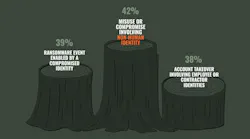 2026 SpyCloud Identity Threat Report
 edgecirclemask_950x535
 dreamstime_xl_293757068 Your Competitive Edge, Delivered
Stay ahead of the curve with weekly insights into emerging technologies, cybersecurity, and digital transformation. TechEDGE brings you expert perspectives, real-world applications, and the innovations driving tomorrow’s breakthroughs, so you’re always equipped to lead the next wave of change.