Why the AI Market May Face a Correction, Not a Collapse
Key Highlights
- Sky-high valuations and speculative investment echo the 1990s, but unlike then, today’s leading AI companies are profitable and well-capitalized.
- Massive CapEx on infrastructure and assets like GPUs, data centers, and cloud networks differentiates AI from dot-com-era spending on unproven business models.
- Selective market correction is likely as smaller, speculative AI firms may see valuations collapse, while essential infrastructure providers remain resilient.
- Market stability depends not just on AI hype, but on broader economic conditions, policy decisions, and investor behavior.

Last week, we posted an article about the artificial intelligence (AI) bubble debate, “Is There an AI Bubble or Not?” We examined how debate continues as AI bubble warnings clash with boom optimism. Some see inflated valuations and unprofitable startups as warning signs, while others say strong demand and real infrastructure investment set this boom apart from the 1990s “dot-com” bubble.
This is part 2 of that article, comparing the dot-com bubble to the current AI era, seeing what tech leaders are saying about it, and getting a macro view of the debate’s inference.
Similarities Between the AI Boom and Dot-Com Bubble
It’s easy to see why confusion and debates continue about whether there’s an AI bubble. The AI surge has striking parallels with the dot-com bubble of the late 1990s, but critical differences also exist that suggest the current market may be more resilient. In fact, both eras exhibit the classic hallmarks of a technology-driven speculative mania:
- Sky-high valuations on merely a promise: Companies with little or no profit are receiving multibillion dollar valuations based purely on the promise of future technological dominance. In the dot-com era, this was “eyeballs on websites” and “potential,” while today, it’s “compute power” and “data advantage.”
- Narrative over fundamentals: A powerful, transformative story line—the Internet then, AI now—drives investment, causing prices to soar faster than actual earnings. This leads to the phenomenon of Price-to-Earnings (P/E) ratios that are hugely inflated.
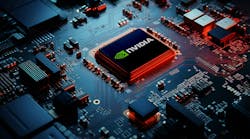
- The boom for AI-adjacent companies: Firms that sell the infrastructure necessary for the boom see explosive, concentrated growth. In the late 1990s, this was Cisco Systems, which provided the routers and switches. Today, it’s Nvidia, which provides the essential GPUs and chips. Cisco’s valuation in the dot-com era proved unsustainable, losing 80% of its value after the crash.
- Speculative investing and circular financing: This is when money is poured into anything with the magic words—"dot-com” then, “AI-powered” now—regardless of a clear, profitable business model. This has led to concerns about “circular” financing, where large investors fund AI startups, and those startups immediately spend the money to buy cloud services and hardware from the same investors.

Key Differences
The primary difference between the AI boom and dot-com bubble is that the biggest players driving the AI era have significantly more robust financial foundations than most dot-com startups did. Several other key differences include:
Leadership’s Financial Strength. During the dot-com bubble, many key companies were unprofitable startups with unproven business models. In the current AI boom, however, the AI titans are decades-old, highly profitable corporations with massive cash flows.
Investment Sources. Dot-com companies often relied on heavy borrowing and volatile venture capital to fund operations and expansion. Today’s AI boom is largely funded by the existing profits and free cash flow of the tech giants, who are reinvesting their own money.
Investment in Physical Assets. Much of the capital expenditure (CapEx) during the dot-com bubble was spent at a loss on marketing and customer acquisition. Now, there’s massive spending on tangible, lasting physical assets such as data centers, specialized GPUs, cloud services, and high-speed networking.
General Index Valuations. In the late 1990s, The Nasdaq-100 P/E ratio reached extremes of about 60 times at its peak. Now, while certain stocks such as Nvidia are highly valued, the broad market’s valuations, while high, typically aren’t as extreme as the dot-com peak.
Technology Utility. In the dot-com bubble, the Internet’s potential was clear, but the business models for profit were often unproven. In the AI boom, Generative AI (GenAI) already demonstrates clear, measurable productivity gains and usefulness across professional and enterprise applications, as well as applications for consumer use.
Some investors are taking action to mitigate the situation. For example, billionaire investor Warren Buffett believes you should invest in businesses that you understand, rather than in the investing fad everyone is talking about. He has been staying away from tech and hoarding T-bills/cash, while reducing his Apple stake over the last few years.
He recently made an exception, though. His conglomerate Berkshire Hathaway just bought 17.8 million shares of tech giant and AI hyperscaler Alphabet, parent company of Google, despite AI bubble fears. It was the largest stock addition in Q3 and was worth about $4.3 billion at the end of September.
Other Perspectives from Industry Leaders
Some investment analysts, tech leaders, and financial analysts have slightly different perspectives on the situation.
Veteran strategist and Clough Capital founder Charles Clough, who predicted the late-1990s market meltdown, reportedly said the real threat to financial markets may not be inflated technology valuations or an AI bubble. He explained that the real danger lies in macroeconomic and structural risks—specifically, a policy mistake by the Federal Reserve that significantly slows growth, or a widening divide between younger and older generations.
In an interview with Bloomberg, he said investors are asking “the wrong questions” when comparing today’s technology rally with past bubbles, emphasizing that the world is different now than it was in the 1990s. Unlike the dot-com boom, earnings power, liquidity, and well-capitalized companies support the current market, he explained.
And when tech behemoth Nvidia speaks, the world listens. Its executives have said their recent astonishing earning results posting sales and profits up more than 60% Y-o-Y, along with growth from other major AI players and the billions being poured into AI infrastructure, indicate fears of an AI bubble are overblown.
Jensen Huang, Nvidia’s CEO, isn’t just brushing off bubble talk; he’s arguing that investors are misreading the nature of this cycle. On the company’s November 19 earnings call, Huang echoed the sentiments of the company’s leaders in rejecting the idea of an AI bubble.
He said that “from our vantage point, we see something very different” from the kind of speculative frenzy that defined past manias, pointing instead to a structural shift in how data centers are built and how software is written. He reasons that hyperscalers, enterprises, and governments are re-architecting computing around accelerated chips, a transition he frames as a multi-year infrastructure buildout rather than a short-lived trade.

“If we delivered a bad quarter, it is evidence there’s an AI bubble. If we delivered a great quarter, we are fueling the AI bubble,” Huang told employees. “If we were off by just a hair, if it looked even a little bit creaky, the whole world would’ve fallen apart.”
More Accurate Than the Yes/No Answer: Correction
Rather than declaring yes or no to the question of whether we’re in an AI bubble, it may be more realistic to land somewhere in the middle: that the AI boom likely will reach a selective correction rather than a total collapse.
For example, the AI sector probably is more likely to undergo a shake-out in which smaller, speculative companies without defensible technology or clear revenue see their valuations collapse, much like the thousands of dot-com firms that disappeared.
In contrast, infrastructure providers might experience a sharp slowdown in growth, but are unlikely to vanish, since their technology remains essential.
And despite the market turbulence, the broader AI revolution will continue. Like the Internet, the technology and its long-term economic impact is undeniable, and won’t “burst” or go away. However, the financial market’s expectations are likely to face a major reality check. After all, AI is a genuine, transformative technological shift.
About the Author

Theresa Houck
Contributor
Theresa Houck is an award-winning B2B journalist with more than 35 years of experience covering industrial markets, strategy, policy, and economic trends. As Senior Editor at EndeavorB2B, she writes about IT, OT, AI, manufacturing, industrial automation, cybersecurity, energy, data centers, healthcare, and more. In her previous role, she served for 20 years as Executive Editor of The Journal From Rockwell Automation magazine, leading editorial strategy, content development, and multimedia production including videos, webinars, eBooks, newsletters, and the award-winning podcast “Automation Chat.” She also collaborated with teams on social media strategy, sales initiatives, and new product development.
Before joining EndeavorB2B, she was an Industry Analyst at Wolters Kluwer in its human resources book publishing operation. Before that, she spent 14 years with the Fabricators & Manufacturers Association, Intl., serving as Executive Editor of four magazines in the sheet metal forming and fabricating sector, where she managed and executed editorial strategy, budgets, marketing, book publishing, and circulation operations, and negotiated vendor contracts.
Houck holds a Master of Arts in Communications from the University of Illinois Springfield and a Bachelor of Arts in English from Western Illinois University.
 Resources
Quiz
Your Competitive Edge, DeliveredStay ahead of the curve with weekly insights into emerging technologies, cybersecurity, and digital transformation. TechEDGE brings you expert perspectives, real-world applications, and the innovations driving tomorrow’s breakthroughs, so you’re always equipped to lead the next wave of change.