Anthropic IPO Filing Offers Rare Look at AI Growth, Costs and Risks, Reveals 14X Revenue Surge
Key Highlights
- Anthropic’s IPO filing exposes the growth, infrastructure demands and risks behind an AI vendor becoming increasingly important to enterprises.
- Rapid model turnover means IT leaders may need to reassess AI vendors more frequently than traditional technology suppliers.
- As AI gains greater enterprise authority, vendor stability, cloud dependence, portability and governance become critical parts of AI risk management.
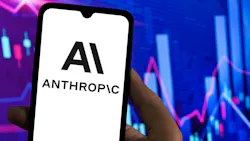
On Oct. 26, Anthropic, maker of the Claude chatbot and a key developer of frontier AI models, painted a picture of future growth propelled by the technology as it filed for what could be the largest-ever initial public offering. The IPO could be just weeks away.
Anthropic's IPO filing with the SEC isn't just a Wall Street story. For IT leaders, it offers a rare look at the economics, infrastructure demands and risks behind a company whose AI technology is moving deeper into enterprise operations.
And besides the numbers, the filing includes an extensive list of dire warnings — including the chance its own technology could put humanity at risk.
So that presents an interesting duality: Anthropic is asking public investors to finance the expansion of increasingly powerful AI while simultaneously telling those investors that controlling increasingly powerful AI is itself a material risk.
The company publicly filed its S-1 registration statement with the SEC on Oct. 26, moving closer to an IPO. The company plans to list its Class A common stock on Nasdaq under the ticker ANT, although the number of shares and proposed price range haven't been disclosed.
The numbers show just how amazingly Anthropic has grown. Revenue reached about $16.3 billion during the first half of 2026, compared with about $1.2 billion during the same period in 2025. As of Sept. 30, more than 1,900 customers were generating at least $1 million in annual revenue for Anthropic, including about 250 generating at least $10 million, according to WIRED's analysis of the filing.
For CIOs, CTOs and CISOs, the filing helps confirm something bigger: AI providers are becoming significant enterprise technology vendors. That means they need to be evaluated like them.
Why Anthropic's IPO raises new questions about AI vendor risk
As companies integrate Claude into important workflows, Anthropic's financial stability, infrastructure capacity, security and product decisions matter more to its customers.
And Anthropic wants that role to grow. Its filing describes a future in which Claude handles open-ended assignments lasting hours, days or weeks and millions of autonomous AI “Virtual Collaborators” work simultaneously.
There's another factor IT leaders need to account for: how quickly technology changes. More than 80% of Anthropic's third-quarter revenue came from model versions released during the previous six months.
That pace could make traditional vendor-review cycles outdated. An annual assessment may not be enough when the technology behind a critical enterprise supplier can change significantly within months.
That makes vendor risk and AI governance increasingly difficult to separate.
IT leaders need to know what systems AI agents can access, what they're authorized to do, how their actions are monitored, and what happens if the underlying AI service isn't available.
Anthropic's IPO reveals the soaring cost of AI infrastructure
The filing also pulls back the curtain on what it costs to provide AI at this scale.
Compute is Anthropic's highest operating cost. The company spent about $8.9 billion on compute and infrastructure during the first half of 2026, up from $2.3 billion a year earlier.
Its expanded relationship with Amazon calls for more than $100 billion in AWS technology spending over 10 years and up to 5 GW of additional capacity. Anthropic also has major compute relationships with Google and Broadcom.
For enterprise customers, those dependencies raise practical questions about capacity, service continuity and portability.
Claude is available through AWS, Google Cloud and Microsoft Azure, giving IT leaders deployment choices. But access to the same model on multiple clouds doesn't necessarily make an AI environment portable. Applications, agents, data pipelines, APIs and security controls built around a model can still make switching difficult.
What AI safety risks did Anthropic disclose in its IPO filing?
The S-1 also contains unusually stark warnings about AI risk.
Anthropic says advanced models could be misused for cyberattacks and other harmful activities and acknowledges the possibility of losing control of increasingly capable AI systems. Anthropic’s prospectus identifies the potential for advanced AI to pose catastrophic or even existential risks.
The company also warns that model capabilities may “advance more rapidly than our ability to develop, validate, and implement” corresponding safety measures.
For enterprises, those warnings bring the issue back to something more immediate: authority and accountability. As AI moves from answering questions to taking actions, companies need clear boundaries around what agents can do and who is responsible when something goes wrong. (See our TechEDGE article, “Who in the World Put AI in Charge?”)
What Anthropic's IPO means for CIOs and IT leaders
Anthropic's filing gives enterprise buyers something they rarely get from a private frontier AI company: a detailed look at the business supporting the technology.
The takeaway isn't whether Anthropic will be a successful public company. It's that enterprises are increasingly building important processes around AI vendors whose technology, infrastructure requirements and economics are changing at remarkable speed.
For IT leaders, model capability is only part of the vendor assessment now.
Capacity, cloud dependence, portability, consumption costs, financial stability, governance and the pace of technological change belong there, too.
About the Author
 Theresa Houck
Contributor
Theresa Houck is an award-winning B2B journalist with more than 35 years of experience covering industrial markets, strategy, policy, and economic trends. As Senior Editor at EndeavorB2B, she writes about IT, OT, AI, manufacturing, industrial automation, cybersecurity, energy, data centers, healthcare, and more. In her previous role, she served for 20 years as Executive Editor of The Journal From Rockwell Automation magazine, leading editorial strategy, content development, and multimedia production including videos, webinars, eBooks, newsletters, and the award-winning podcast “Automation Chat.” She also collaborated with teams on social media strategy, sales initiatives, and new product development.
Before joining EndeavorB2B, she was an Industry Analyst at Wolters Kluwer in its human resources book publishing operation. Before that, she spent 14 years with the Fabricators & Manufacturers Association, Intl., serving as Executive Editor of four magazines in the sheet metal forming and fabricating sector, where she managed and executed editorial strategy, budgets, marketing, book publishing, and circulation operations, and negotiated vendor contracts.
Houck holds a Master of Arts in Communications from the University of Illinois Springfield and a Bachelor of Arts in English from Western Illinois University.
 Resources
Quiz
Your Competitive Edge, DeliveredStay ahead of the curve with weekly insights into emerging technologies, cybersecurity, and digital transformation. TechEDGE brings you expert perspectives, real-world applications, and the innovations driving tomorrow’s breakthroughs, so you’re always equipped to lead the next wave of change.