The Transformation of Mission-Critical Facilities
Key Highlights
- Resilience is the mandate: 60% rank business continuity planning for critical operations as the top facilities management risk priority.
- Hardening the stack: 30% are prioritizing backup power/energy reliability; 34% are tightening cybersecurity for smart building systems.
- AI at work (not pilots): 28% of orgs — 46% of large enterprises — have embedded AI for predictive maintenance and automated workflows, reducing outages and freeing teams for higher-impact work.

Facility managers in mission-critical environments — such as hospitals, manufacturing plants and data centers — need more than good maintenance; they need provable continuity under stress. JLL’s Global State of Facilities Management Report 2025 shows resilience priorities converging with IT, with cyber safeguards for smart building systems and energy reliability at the top of the risk agenda. In practice, that means mapping single points of failure (power, cooling, OT networks), running cross-functional tabletop exercises, and closing documentation gaps so decisions stand up to audit, insurance, and board scrutiny.
The numbers underscore the shift: 30% of organizations are prioritizing energy-supply reliability and backup power, 34% are hardening cybersecurity for smart buildings, and 60% cite business continuity planning for critical operations as the foremost risk-management priority. As JLL’s Wei Xie notes, facility management is moving from a defensive cost center to an offensive engine for competitive advantage, protecting uptime, safety, and brand trust across the portfolio. Align preventive maintenance, life cycle strategies and supply-chain resilience to those resilience KPIs, and treat deferred maintenance as a quantified risk, not a budget footnote.
Also of note: AI has jumped from pilots to production. By fall 2025, 28% of organizations have embedded AI across operations (rising to 46% in large enterprises), using it for asset-lifecycle planning, predictive maintenance and automated work-order flows. The payoff: fewer outages, faster MTTR, tighter SLA performance — and data trails leaders can use in capacity, capex and risk decisions. As Xie puts it, automating high-volume admin work frees managers and technicians to focus on higher-impact problem-solving and stakeholder engagement.
Execution still decides winners. Prioritize tools that integrate with legacy BMS/CMMS, protect data quality and security, and translate telemetry into clear actions (e.g., condition-based PM triggers, vendor scorecards, energy-optimization setpoints). Pair AI with practical workflows — change management, role-based dashboards, and governance that spans IT, OT, and sustainability — so your teams spend less time on clicks and more time preventing failures. The result is a tech-enabled facility management function that boosts reliability today while building a pipeline of digitally native talent for tomorrow.
Read more from Buildings Editor Lauren Brant in "JLL Releases Global State of Facilities Management Report 2025: What FM Leaders Must Know."
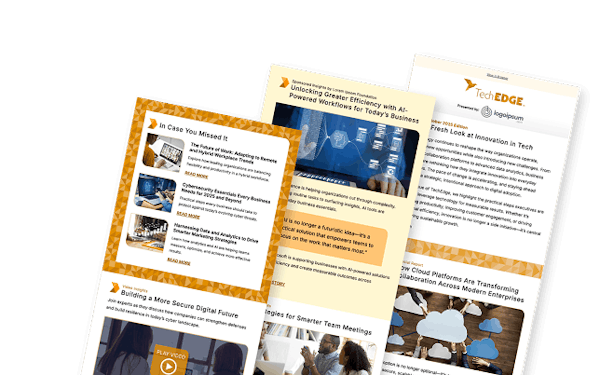
Want the EDGE delivered to your inbox every week?
It's free to subscribe, but the intel is priceless.
 Quiz
Quiz
Your Competitive Edge, DeliveredStay ahead of the curve with weekly insights into emerging technologies, cybersecurity, and digital transformation. TechEDGE brings you expert perspectives, real-world applications, and the innovations driving tomorrow’s breakthroughs, so you’re always equipped to lead the next wave of change.