GE Vernova's Innovation Hub: Pioneering Carbon Capture, Robotics, and AI for a Sustainable Energy Future
Key Highlights
- Carbon capture and direct air capture technologies help emissions-intensive industries reduce CO2 while maintaining operations and lowering regulatory risk.
- Advanced robotics and AI in wind operations reduce human risk, lower costs and provide consistent performance across turbines, with potential applications across other energy infrastructure.
- AI-powered grid control technologies enable predictive maintenance and faster outage recovery, directly reducing operational risk for energy-dependent businesses.
- Companies that adopt and integrate these technologies can lower costs and maintain reliable operations.
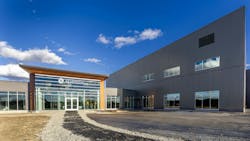
Energy-dependent industries face rising costs, regulatory pressure and reliability challenges. GE Vernova’s new Advanced Research Center in Niskayuna, New York, is developing technologies such as carbon capture, robotics and AI grid control to directly address these risks and opportunities.
Whether and how well these innovations are adopted will not only affect energy operators but also manufacturers, data centers and other power-dependent industries.
Carbon capture: An attainable goal for emissions-intensive industries
GE Vernova, spun out of General Electric in 2024, collaborates with industry, government and academia to advance the energy transition. The company is expanding its Advanced Research Center Facility in Niskayuna, New York, supported by nearly $100 million in investment and $9.6 million in state tax credits, creating 75 research jobs focused on decarbonization, grid technology and AI.
One technology GE Vernova researchers are looking to scale is carbon capture and sequestration (CCS) as a practical way to reduce carbon dioxide emissions. CCS is a three-step process that involves capturing the CO2 produced by power generation or industrial activity (such as hydrogen production, steel or cement making), transporting it, and permanently storing it deep underground.
CCS has been used in the U.S. since 1972, when several natural gas plants in Texas began capturing and storing large amounts of CO2 underground.
Beyond emissions reduction, CCS allows industrial operations to continue while transitioning to a low-carbon economy, providing a buffer against carbon pricing and regulatory shifts. Another bonus: Carbon capture processes leverage existing power and industrial facilities, a more cost-effective approach than building a new, alternative energy infrastructure from scratch.
At the Niskayuna facility, researchers are advancing solid sorbent-based carbon capture technology and Direct Air Capture (DAC) systems to significantly reduce industrial CO2 emissions and lower capital and energy costs. The research focuses on developing efficient materials, modular designs for scalability, and reducing energy consumption to make carbon capture economically viable. In a dedicated DAC lab, researchers focus on improving efficiency and lowering costs, making carbon capture more commercially viable.
Partnerships and ongoing studies remain vital to the process. GE Vernova researchers collaborate with partners like Svante, a British Columbia CCS and removal solutions provider, to develop and evaluate solid sorbent-based carbon capture technology.
 dreamstime_xxl_394069548
 legos
legos edgecirclemask_540x250
Robotics reduce risk and help to standardize performance
The Niskayuna research center also has its sights set on wind turbine manufacturing technology. Advanced robotics and AI are helping standardize wind turbine operations across fleets, improving safety, lowering costs, and creating capabilities across infrastructures.
Robots and drones perform much of the dangerous and demanding work involved with monitoring electricity-generating wind farms. While human supervision remains critical, drones take thousands of photos, crawlers access hard-to-reach places, and integrated AI solutions analyze vast quantities of data. Industry analysts say robotics is a $14.21 billion market in the energy sector and is projected to reach $36.8 billion by the end of 2030.
“Imagine wind turbines that see, talk, and react to one another, turbines that auto-adjust operations in real time based on weather and ambient conditions,” says GE Vernova (2024).
The Vernova research team says that improving the future of wind relies on the advancement and application of AI and machine learning to enable adaptive wind farm controls. The scope of the project spans onshore and offshore turbines. The research team is tasked with designing a more robust sensor system for GE’s wind turbines to continually monitor asset health and identify any outlier behavior before costly issues arise. Meanwhile, automated turbine inspections, particularly for offshore applications, improve safety and speed while lowering costs.
The expansion of GE Vernova’s Advanced Research Center reflects a broader trend: Energy innovation is no longer confined to efficiency gains or emissions reductions alone, but is increasingly focused on resilience, scalability and economic durability.
AI secures the grid
AI adoption in renewable energy sectors is growing rapidly, driven by AI’s ability to optimize energy generation, improve grid management and enhance predictive maintenance. Properly utilized, AI tools can help prevent grid congestion, data center load and electrification pressure.
Grid AI is a newer category of strategic risk management, and it is a mission-critical infrastructure. AI tools analyze vast datasets to predict faults in power lines, allowing for proactive maintenance and faster restoration after outages, and preventing revenue-losing downtime for manufacturing, data centers and critical infrastructure.
Still, AI adoption in renewable energy presents very real challenges, including things like how to guard against cybersecurity threats and system vulnerabilities, such as hallucinated recommendations that could destabilize the grid. As AI increasingly influences grid decisions, boards and regulators will need to assess accountability, fail-safes and cybersecurity measures.
In this report, GE Vernova maintains that AI and machine learning are the future for grids, helping to maximize resilience, efficiency and sustainability through automation and real-time insights.
Energy industry companies, such as those involved in power generation, oil and gas, chemicals, and mining, often generate plenty of data but may struggle to collect meaningful and timely insights from that data. This is another instance where artificial intelligence can shine.
The takeaway: Innovation drives competitiveness
Executives who align with research-driven energy innovation gain cost, reliability and regulatory advantage. In essence, they position their businesses for long-term competitiveness in an electrified economy.
The expansion of GE Vernova’s Advanced Research Center reflects a broader trend: Energy innovation is no longer confined to efficiency gains or emissions reductions alone, but is increasingly focused on resilience, scalability and economic durability. Technologies such as carbon capture, robotics-enabled wind operations and AI-driven grid control are becoming tools for managing regulatory uncertainty, extending the life of existing assets, and reducing downtime across energy-intensive industries.
As electrification, data center growth, and industrial decarbonization place new demands on power systems, research-driven platforms like this one are shaping how quickly and reliably those systems can adapt.
The future competitiveness of many businesses will likely be influenced not only by energy prices, but also by how effectively they utilize advanced digital and physical technologies that support a larger energy transition.
About the Author
 Sara Scullin
Sara Scullin
Contributor
Sara Scullin is an award-winning freelance writer in Fort Atkinson, Wisconsin, with years of experience developing high-impact content that helps drive innovation and positive change. She is passionate about helping brands translate complex technical solutions into insightful takeaways for busy industry professionals.
Her work, which blends technical information with compelling narratives, has been featured in industry publications like Specialty Fabrics Review, VehicleServicePros.com and Officer.com. Sara prides herself on being a reliable content partner who consistently develops original, quality work on time, allowing her clients to focus on core business growth.
Some of the topics she has covered include B2B tech, manufacturing, and leadership trends across textiles, agriculture, automotive aftermarket and public safety industries. When she is not covering industry movers and shakers, Sara enjoys hiking and exploring with her family and dog, Ginger.
 Resources
Quiz
Your Competitive Edge, DeliveredStay ahead of the curve with weekly insights into emerging technologies, cybersecurity, and digital transformation. TechEDGE brings you expert perspectives, real-world applications, and the innovations driving tomorrow’s breakthroughs, so you’re always equipped to lead the next wave of change.